
Open Mon 12:00 pm – 5:00 pm, Tues – Sat 10:00 am – 5:00 pm, Sun 12:00 pm – 5:00 pm
232 Xenia Ave. Yellow Springs, Ohio. 45387
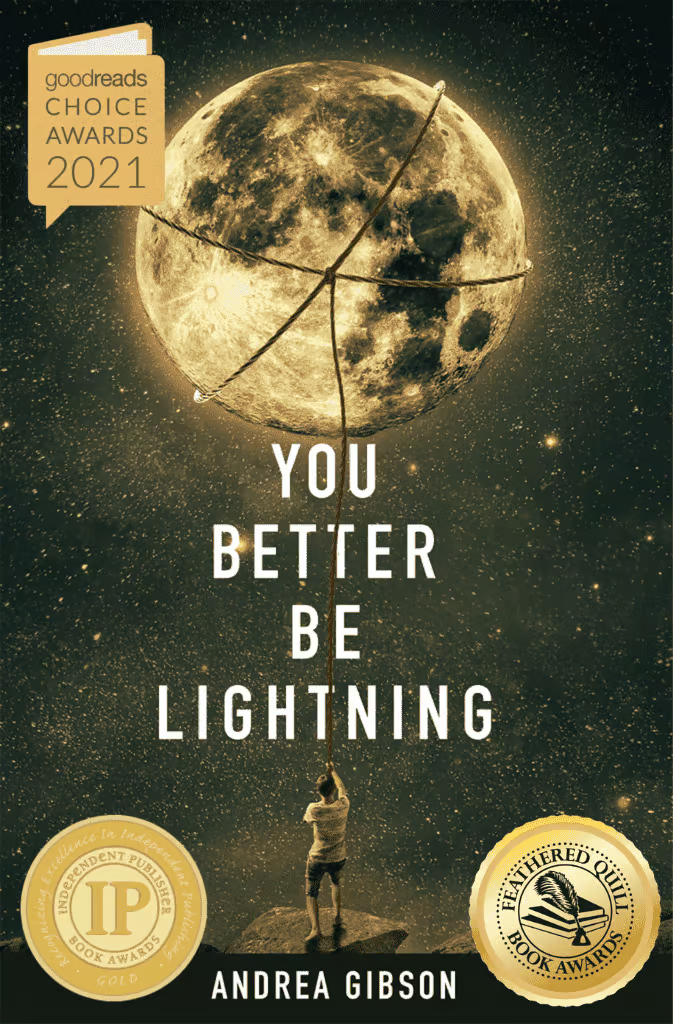
You Better be Lightning by Andrea Gibson
By Merida Kuder-Wexler
August 5, 2026
“Out the big window in front of me, through the green yard sheltered by walnut and magnolia trees, my neighbor swings in his yard, old chains creaking…”
Read more
Out the big window in front of me, through the green yard sheltered by walnut and magnolia trees, my neighbor swings in his yard, old chains creaking. His dog runs outside. A baby deer sleeps in the grass on the other side of my yard. This is the scene I live every summer. But I haven’t always noticed it.
There are many mundane moments we live through every day. So much slips beneath our noticing. Andrea’s poems remind us how to see—to see everything. The easy, the messy, the beauty in it all. They bring us back to the part of ourselves that sees clearly, without rushing or avoiding anything. Their poems show the way they have filled their life with love in every way possible.
Whether writing about gender, mental health, climate change, illness, or aliens, Andrea brings a lightness to the most painful subjects. They hold up a magnifying glass to all the suffering in the world to show that there are little specks of light everywhere.
As Andrea says,
“…every falling leaf is a tiny kite
with a string too small to see, held
by the part of me in charge
of making beauty
out of grief.”

A Hymn to Life Review by Gisele Pelicot
By Savannah Brantley
April 3, 2026
“While the world was on pause in 2020, Gisele Pelicot (now Guillou, her maiden name) was facing the deterioration of her life…”
Read more
While the world was on pause in 2020, Gisele Pelicot (now Guillou, her maiden name) was facing the deterioration of her life. Her story has been shared as a tale of male induced tragedy. At its peak in the global news cycle, her face appeared above headlines that mocked her, questioned her, or praised her.
I thought she looked strong. Even in blurred shots of her wearing her bulky black sunglasses, I sensed from her a dignity that held firm among the reporters that followed her and swarmed outside the courthouse.
I don’t know much about French culture, much less about the feminist discourse there. I do know that A Hymn To Life doesn’t only explore feminism through the French lens, but narrows in on Gisele and her experiences with brutal honesty. In more ways than one, she subverts the expectation that she would, or should, be ashamed of her experiences. Her decision to waive the anonymity of her trial in 2024 shocked many, including the judges overseeing her case, but it brought into focus the men who had abused her and her identity as a woman fighting against them, rather than a victim.
Anyone who identifies as a woman, anyone who has dealt with loss, betrayal or abuse, would find hope in this memoir. It pulls apart the victimhood attached to survivors and reveals its complexities, the many layers of what it means to be someone who has lived and who chooses to keep living. Gisele does not take on the image of an icon, martyr or celebrity. The way she weaves through her childhood in the French countryside, then her teen-hood as she explores her body and her relationships, and ultimately her life as it was with Monsieur Pelicot, leaves nothing to be questioned. It is an honest look into how one can be faced with a tragedy and still retain who they are, before and after.
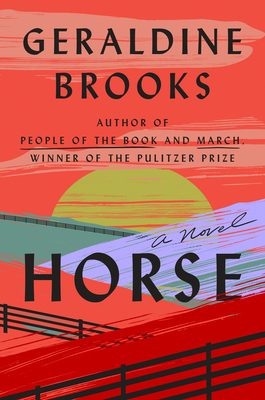
Horse by Geraldine Brooks
By Barbara Beckerman Davis
March 6, 2026
“At the center of this complex historical novel are two extraordinary figures…”
Read more
At the center of this complex historical novel are two extraordinary figures: Lexington, the famous antebellum racehorse on whose life Horse is based, and Jarrett his groom, the enslaved son of the freed trainer Harry Lewis. The novel unfolds in two entirely different time frames and locations: the first, the 1850s in Kentucky and later New Orleans; the second, Washington D.C., primarily the Smithsonian Museum in 2019. In the historical chapters the daily lived reality of life is experienced firsthand, especially the developing relationship based on mutual trust, respect and love between Lexington and Jarrett, and Jarrett’s growing self-awareness of his enslaved condition. In the contemporaneous fictional sections, the story is painstakingly pieced together using the embarras de richesse of the Smithsonian and the scientific knowledge of its staff. The powerful glue connecting the two stories is the institution of slavery, the racism it produces, underpinned by the savagery of American capitalism; it shapes and corrupts every relationship between Black and White (and horse), although far more subtly and insidiously in 2019. In both cases, Brooks writes against the grain, leaving the description of the horrific elements of slavery to historians and filmmakers. Horseracing in North and South was a niche occupation for the rich, conferring privilege and respect on its practitioners—trainers, grooms and jockeys—many of whom were Black.
The problem with such a format is that it breaks the flow of narrative. In this case, both stories are so compelling it makes the challenge worthwhile.

The Correspondent by Virginia Evans
By Emma Robinow
January 15, 2026
“I’m not sure there’s any better description of parenting in your 40s…”
Read more
The Correspondent by Virginia Evans was my favorite book of 2025!
This novel follows retired lawyer Sybil Van Antwerp as she navigates life, love, grief, and regret through letters, emails, and journal entries.
One quote from Sybil that really stuck with me –
“I didn’t know it was happiness at the time because it felt like busyness and exhaustion and financial stress and self-doubt.”
I’m not sure there’s any better description of parenting in your 40s. Sybil will find her way into your heart with her honesty (flaws and all). Enjoy!
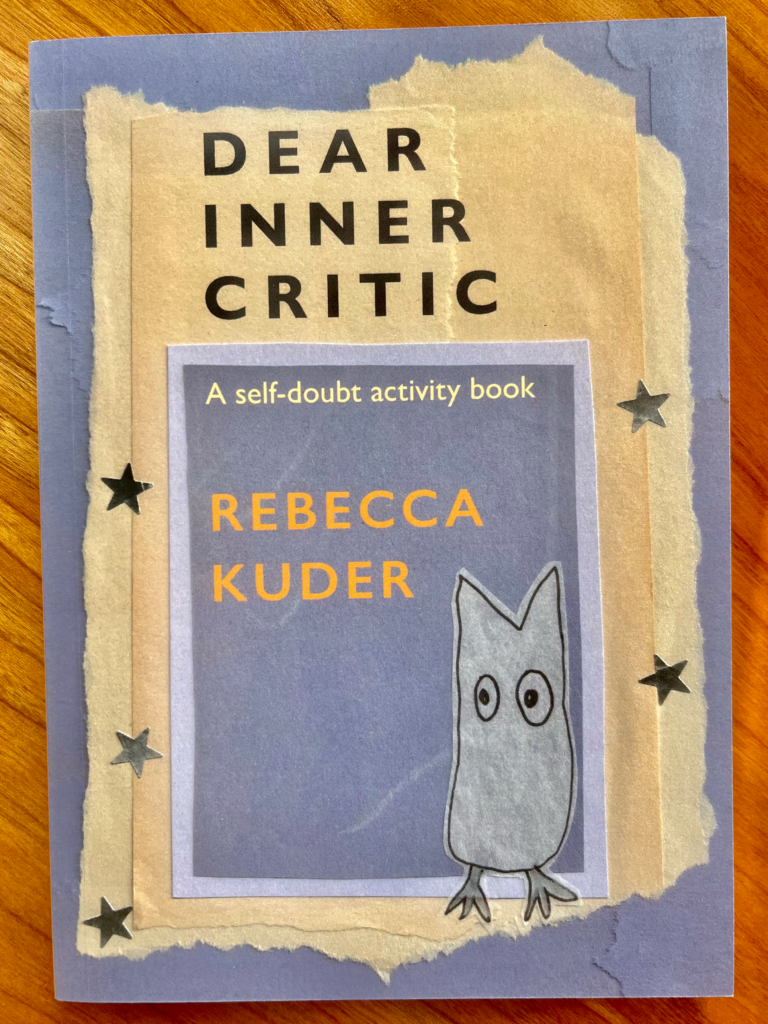
Dear Inner Critic by Rebecca Kuder
By Kathy Engisch
November 28, 2025
“The most recent book I have read on writing is one I can recommend to those who have absolutely no time to read (or write!)…”
Read more
Rebecca Kuder’s “Dear Inner Critic” is the book for you. I finished it over the past week, reading while I ate my breakfast. That is not how it is supposed to be used, but now that I have read it straight through, I can go back and do the writing/creativity exercises. There is humor, simple pictures that capture the heart of what she is saying, and examples of her responses to the prompts.
In Chapter 6, the prompt is to write a letter to your inner critic. The structure supplied by Kuder is to set a timer for 5 minutes, begin your letter with “Dear Inner Critic…”, and write until the time is up. She also provides a photo of her handwritten letter, with vulnerable lines like “But who cares if I look dumb?” and a strong finish: “So lay off.”
This book is not just a creativity freer; it will help you climb out of the hole of self-criticism and defeatism, which I found especially relatable. It also distills the lessons of other wonderful writing books, like the free writing of “The Artist’s Way,” by Julia Cameron (Handwrite five pages a day on whatever comes into your mind, without judgment) and the simple writing prompts of “Writing Down the Bones,” by Natalie Goldberg (Go on a walk. Notice everything you pass that is pink and describe it). So, if you are going to read one book on getting your writing/creativity going, this is the one.
My inner critic says there are some awkward sentences in here that need rewriting, but I am going to ignore her.

Bird by Bird by Anne Lamott
By Kathy Engisch
November 13, 2025
“I have a few things to say about some great books on writing that I have found helpful over the years…”
Read more
The first book I read that was specifically about writing — and not a memoir or an essay by a writer — was “Bird by Bird,” by Anne Lamott. The book loosely revolves around the lessons Lamott uses to teach writing at Book Passage, a bookstore in the Bay Area (this arrangement is discussed in an essay about Book Passage in James Patterson’s book, “The Secret Lives of Booksellers and Librarians”). The owner of Book Passage knows Anne Lamott, a not-yet-established author, and asks her to help in the bookstore by overseeing a writing group. In the course of describing these lessons, “Bird by Bird” has many tools to help you keep writing (or start writing!) when you are stuck, or overcome by self-doubt or the inner critic.
The tools are helpful strategies for any overwhelming project, from laundry to grading papers to writing a novel, where you are having trouble completing the task (or starting it!). This is where the title comes in, and I cannot do justice to the story as Lamott tells it, but the gist is that one can get into a panic over a complex task that is impossible to complete within the time remaining before it is due. The human response to this is to rail against the powers that be that are making you do the task, and yourself — why didn’t you start earlier? — and completely give up and go watch TV.
The solution offered by Lamott is to simply start one tiny part of the task. I have had to learn this lesson over and over. If you just start, it turns out not to be so bad, and any task will eventually get tackled as long as you consistently put in effort, day by day and bird by bird.
The thing I love most about “Bird by Bird” is Anne Lamott herself, and her cranky, jealous, critical personality. She throws vitriol at all those who seemingly find it easy to write and who are hugely successful. She criticizes them, even those who are her best and closest friends, and I found it funny and comforting to read about a fellow ungenerous spirit.
At one point, she describes how she worked very hard to revise a manuscript that had been negatively received by her editor. She revised and revised, but he remained unsatisfied. Finally, she completely tears it down and starts again from the beginning. Eventually, she produces something she knows is good, and you realize by then that it no longer matters what the editor thinks. This is a book that made me fall in love with the author, which few books have done in my life. It is a bonus that you also learn dozens of effective actions to kickstart your writing.
More to come…

Butt or Face? by Kari Lavelle
By Emma Robinow
October 28, 2025
“This book was so much fun!”
Read more
I brought “Butt or Face” by Kari Lavelle along to an appointment with my kids where I knew we would be waiting for a bit. We laughed, learned about many different animals, and had great a discussion. Perfect for the 8-year-old in all of us!
Hours and Address
Tues 12:00 pm – 5:00 pm, Wed – Sat 10:00 am – 5:00 pm, Sun 1:00 pm – 5:00 pm
232 Xenia Ave. Yellow Springs, Ohio. 45387
Stay Connected
© 2025. All rights reserved.
Powered by WordPress Hosting.